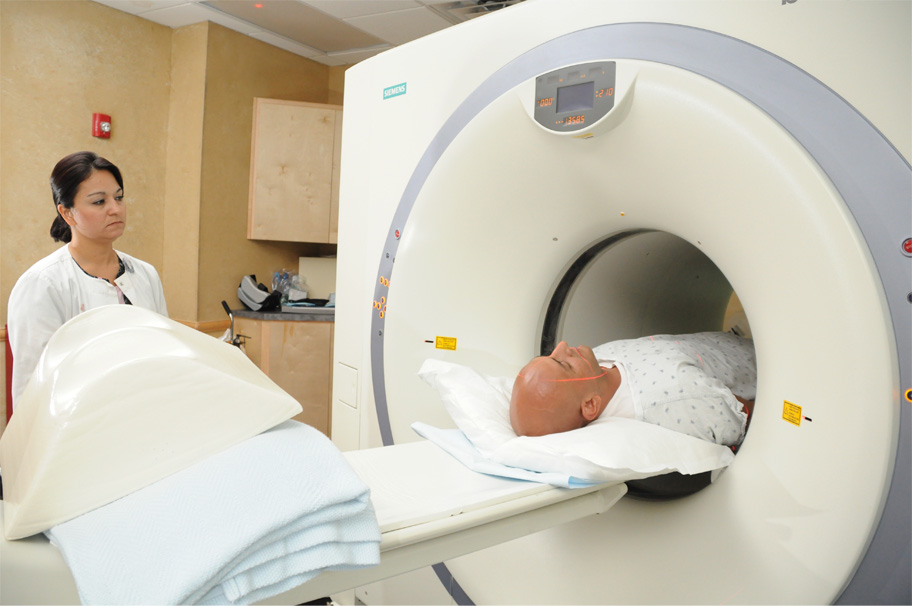
PET-CT (Positron emission tomography–computed tomography)
Positron emission tomography–computed tomography (better known as PET-CT or PET/CT) is a medical imaging technique using a device which combines in a single
gantry system both a
positron emission tomography (PET) scanner and an
x-ray computed tomography
(CT) scanner, so that images acquired from both devices can be taken sequentially, in the same session, and combined into a single superposed (
co-registered
) image.
PET-CT has revolutionized
medical diagnosis
in many fields, by adding precision of anatomic localization to functional imaging, which was previously lacking from pure PET imaging. For example, many diagnostic imaging procedures in
oncology
,surgical planning
,radiation therapy
and
cancer staging
have been changing rapidly under the influence of PET-CT availability, and centers have been gradually abandoning conventional PET devices and substituting them by PET-CTs.
Indications of PET/CT Scans :
- Detect cancer.
- Determine the extent of spread of cancer.
- Determine the treatment plan and assess its effectiveness, such as surgical planning, radiotherapy and chemotherapy.
- Determine if a cancer has returned after treatment.
- Determine blood flow to the heart muscle.
- Determine the effects of a heart attack, or myocardial infarction, on areas of the heart.
- Identify areas of the heart muscle that would benefit from a procedure such as angioplasty or coronary artery bypass surgery (in combination with a myocardial perfusion scan).
- Evaluate brain abnormalities, such as tumors, memory disorders, seizures and other central nervous system disorders.
- Map normal human brain and heart function.
Patient Preparation :
- 48 hours before your appointment:
- Do not do any strenuous exercise or activity.
- 24 hours before your appointment:
- Stay on a VERY LOW-carbohydrate, NO-sugar diet.
- 6 hours before your appointment:
- Do NOT eat anything with the exception of water.
- Drinking water is encouraged to ensure hydration for best test results.
- Continue to take medications as prescribed.
- Diabetic patients will receive special instructions to prepare for this exam.
You will be asked to wear a gown during the exam.
Women should always inform their physician or technologist if there is any possibility that they are pregnant or if they are breastfeeding.
This study may not be suitable for pregnant women because of the radiation dose to the growing foetus. Women who are breastfeeding and people who are the primary or sole carer for small children may need to make special preparations for after the test, to stop breastfeeding for a short time, and to avoid close contact with young children. This is due to the small amount of radioactivity your body may release for a while after the test.
You should inform your physician and the technologist performing your exam of any medications you are taking, including vitamins and herbal supplements. You should also inform them if you have any allergies and about recent illnesses or other medical conditions.
You will receive specific instructions based on the type of PET scan you are undergoing.
Metal objects including jewelry, eyeglasses, dentures and hairpins may affect the CT images and should be left at home or removed prior to your exam. You may also be asked to remove hearing aids and removable dental work.
Generally, you will be asked not to eat anything for several hours before a whole body PET/CT scan since eating may alter the distribution of the PET tracer in your body and can lead to a suboptimal scan. This could require the scan to be repeated on another day, so following instructions regarding eating is very important. You should not drink any liquids containing sugars or calories for several hours before the scan. Instead, you are encouraged to drink water. If you are diabetic, you may be given special instructions. You should inform your physician of any medications you are taking and if you have any allergies, especially to contrast materials, iodine, or seafood
Procedure:
- PET/CT imaging is usually performed on an outpatient basis, but is often performed on hospitalized patients as well.
- A nurse or technologist will insert an intravenous (IV) catheter into a vein in your hand or arm.
- Depending on the type of nuclear medicine exam you are undergoing, the dose of radiotracer is then injected intravenously..
- Typically, it will take approximately 60 minutes for the radiotracer to travel through your body and to be absorbed by the organ or tissue being studied. You will be asked to rest quietly, avoiding movement and talking.
- You will then be moved into the PET/CT scanner and the imaging will begin. You will need to remain still during imaging. The CT exam will be done first, followed by the PET scan. The actual CT scanning takes less than two minutes. The PET scan takes 15-20 minutes Total scanning time is approximately 20 minutes.
- If you had an intravenous line inserted for the procedure, it will usually be removed following completion of the scan
- Except for intravenous injections, most nuclear medicine procedures are painless and are rarely associated with significant discomfort or side effects.
- Unless your physician tells you otherwise, you may resume your normal activities after your nuclear medicine scan. Nursing mothers should wait for 24 hours before resuming breast-feeding
- Through the natural process of radioactive decay, the small amount of radiotracer in your body will lose its radioactivity over time. It may also pass out of your body through your urine or stool during the first few hours or days following the test. You should also drink plenty of water to help flush the radioactive material out of your body as instructed by the nuclear medicine personnel
Advantages:
- By identifying changes in the body at the cellular level, PET imaging may detect the early onset of disease before it is evident on other imaging tests such as CT or MRI.
- Greater detail with a higher level of accuracy; using a PET-CT imaging because both scans are performed at one time without the patient having to change positions, there is less room for error.
- Greater convenience for the patient who undergoes two exams (CT & PET) at one sitting, rather than at two different times.